The Mask Vault
Read invented faces through material, symmetry, and the deliberate language of reflected light.
Enter this wing →A fictional digital museum · Canada
An original speculative archive of imagined ceremonial objects, molten materials, and rhythm-led stories. Every culture in these galleries is fictional; every exhibit is designed for wonder, not wagering.
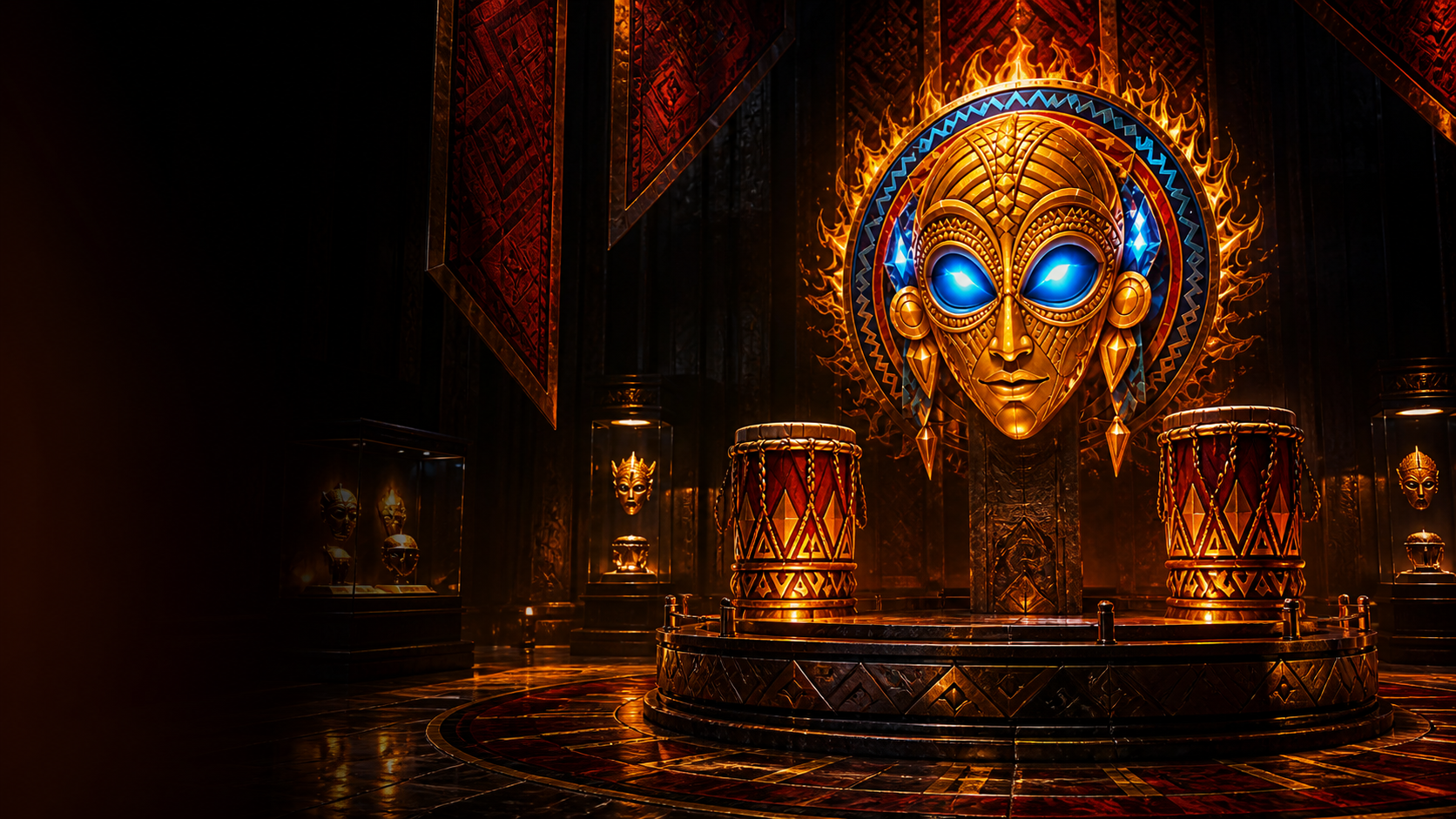
Begin with the object
Colour, texture, heat, and rhythm become the evidence. Move through four connected wings to see how a single imagined mask can become material study, sound map, story fragment, and conservation question.
Read invented faces through material, symmetry, and the deliberate language of reflected light.
Enter this wing →Trace five imagined beat patterns across drums, walls, and the blue line embedded in the floor.
Enter this wing →Follow brass, glass, fibre, charcoal, and stone from raw sample to finished speculative object.
Enter this wing →Enter short works of field fiction that propose who made these objects—and why they were left behind.
Enter this wing →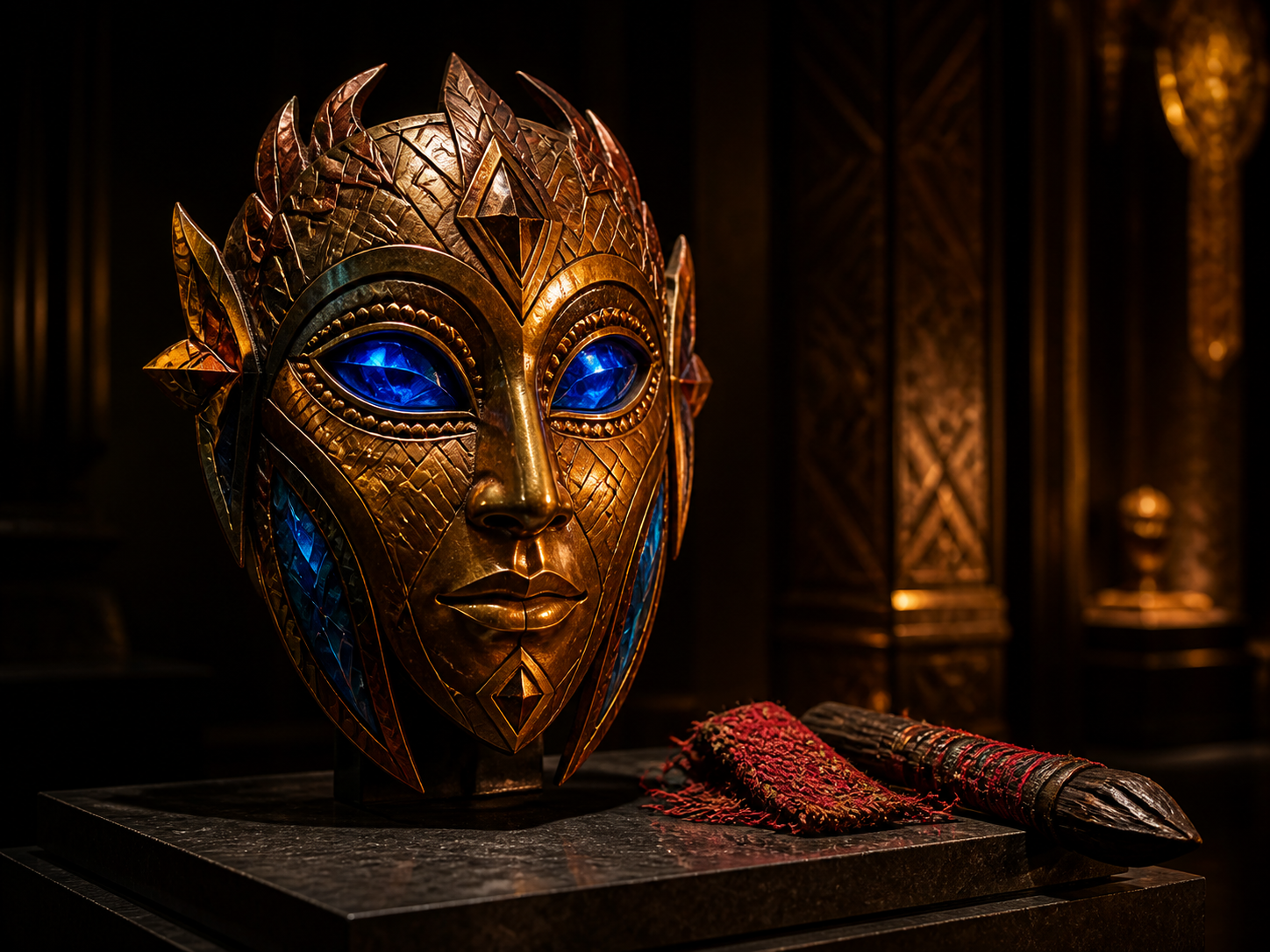
Object study · Mask Vault
A face built to receive sound rather than return a gaze.
The blue glass panels mark seven imagined listening points. Under warm light, their surfaces appear almost black; under cool light, thin internal fractures become visible. The brass is intentionally uneven, carrying shallow hammer marks that suggest the hand without claiming an actual historical maker.
This object belongs to no existing people, nation, or spiritual practice. It is a speculative museum piece created for Ember Chorus and labelled as fiction throughout the archive.
Reading protocol
Start with visible evidence: seams, scratches, reflected colour, material weight, and signs of use.
Each object record clearly separates invented narrative from notes about design and fabrication.
The archive offers possibilities, not claims about real cultures. Ambiguity is part of the exhibit.
Rhythm Chamber · Sequence five
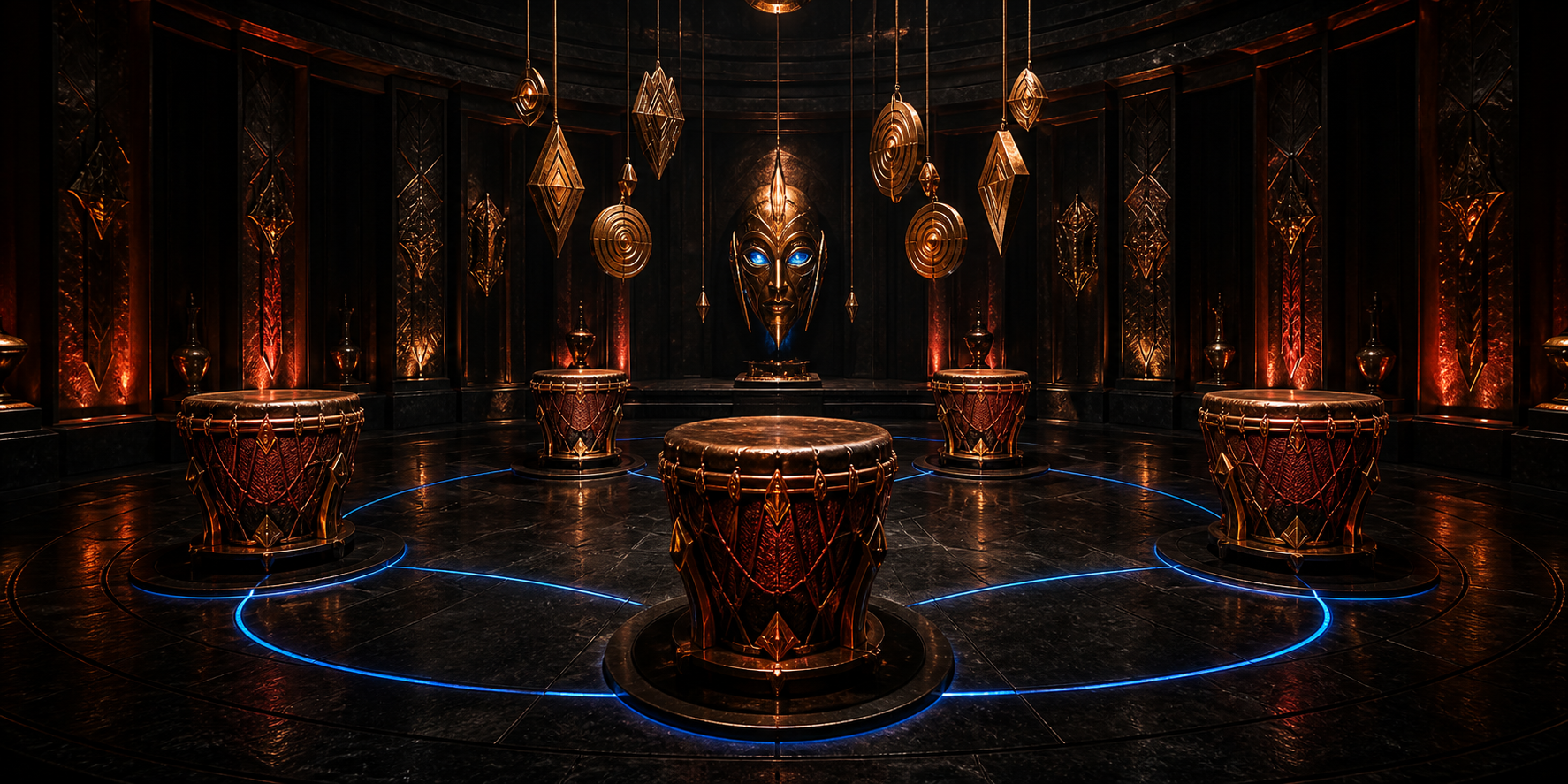
Five drums create a visual rhythm before a single note is imagined. Visitors follow the cobalt line clockwise: pulse, answer, pause, echo, return. The sequence is described in language and diagram, keeping the digital gallery quiet and accessible.
Material index
Warm, reflective, visibly worked.
Cool depth and sharp edge-light.
Soft texture against metal.
Matte grain and quiet weight.
Dark mirror, stable foundation.
From the curatorial desk
A conservator returns after closing and discovers that the Rhythm Chamber has redrawn its own route.
7 min read →A close reading of fingerprints, oxidation, and the museum’s impossible cleaning ledger.
5 min read →How one invented object accumulated titles as it moved through imaginary collections.
6 min read →Your next room
The museum is always open, entirely digital, and free to read. Begin with the Mask Vault, follow the listening circuit, or write to the curatorial desk with an observation.
Write to the curator